2020 Election, General, Politics

Fighting the Foreign Trolls

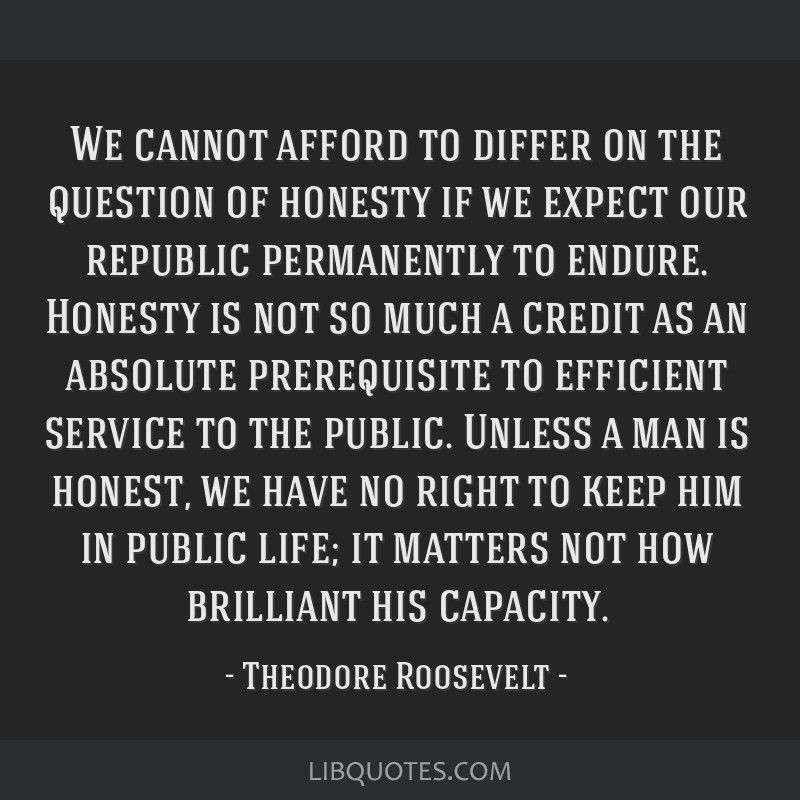
I wish that all Americans would realize that American politics is world politics.

Theodore Roosevelt

Labor Day traditionally marks the beginning of the general election season.  After the revelations about Russian interference in the 2016 election, we now know that our political discourse is dangerously open to manipulation by malignant foreign governments.  The good news is that the US is becoming better at identifying and countering these trolls through the new US Cyber Command, which successfully took down the Russian Internet Security Agency’s effort to influence the 2018 midterm elections (see this article from the Council on Foreign Relations).  Nevertheless, Theodore Roosevelt’s advice should always be on our minds. More than ever, American politics is world politics, and all Americans need to see themselves as the first line of defense against attacks against our democracy and be informed on how to identify them.

The Alliance for Securing Democracy recently produced a helpful guide on the methods and messages authoritarian regimes like Russia, China and Iran may use in such attacks.  It points out that while their foreign policies may differ, all three see the US as their enemy and peddle misinformation that converges in various ways.  The difference between their messages and the legitimate criticism that is a hallmark of a free election is that our adversaries seek to sow despair and division, not hope and positive solutions.  Social media platforms definitely need to do more to identify and take down these trolls.  However, each of us will have an important daily role in rejecting these attacks against America and our democratic values here at home in the upcoming 2020 campaign.

2020 Election, General, Politics

Whither American Nationalism Now?

As we move on after the wreckage of the Trump administration, this call to courage from Theodore Roosevelt is both sobering and hopeful.  Nationalists made a mistake in putting their hopes in Donald Trump.  He damaged the nationalist brand, but not irreparably. The occasional successes of the last four years point the way to repairing the damage and rebuilding it on a positive policy platform. 

First, we have to accept the reality of the damage. True American nationalism seeks to build a common American identity across cultural and other boundaries. Instead, Donald Trump associated it an ugly white ethnic nationalism that fed identity politics, rather than fighting it.  A movement to create a progressive conservatism that strengthened America and the middle class instead enacted a major tax cut that benefited globalist corporations without requiring any corresponding investment in the nation. (see this previous post). Worse, it ended, not with a celebration of American culture and symbols, but with a sickening attack on the Capitol building, one of the citadels of American freedom itself.

However, there are unmistakable signs of success amidst these failures. The blue wave anticipated by Democrats never really materialized.  As this article illustrates, Trump’s nationalist trade and immigration policies were popular not only with white voters, but also minority voters. The shift towards a realist foreign policy and the withdrawals from Afghanistan and the Middle East caused heartburn among mainstream neocons and liberal hegemonists, but fulfilled Trump’s major foreign policy promises. All of this forced candidate Biden to talk about buying American, creating good jobs and getting tough on China. Thus, while Trump’s rhetoric often failed to meet the reality, there were still solid accomplishments.

American nationalists now need to hold President Biden and Vice-President Harris accountable for results that matches their rhetoric. Biden’s Democratic Party is still led by a Senate majority leader that represents Wall Street and a Vice President and Speaker of the House from the headquarters of Silicon Valley and Big Tech. Their goal of union-wage level jobs is commendable, but will be worthless if companies shift production to China and elsewhere overseas as they did during the Obama Administration. Calls for unity are nice, but are hypocritical if they result in a new woke identity politics that essentially is a left-wing echo of Trump’s ethnic nationalism.

In order to recover from this setback, American nationalists need to highlight our common concerns by building coalitions across party and other boundaries. If Biden pursues policies that really create secure good-paying jobs that strengthen America, we should cheer for and support such policies.  We also should remember the old maxim that all politics is local and start to build grass-roots organizations at the city, county and local level. Finally, we should avoid social issues so long as tolerance is observed on both sides.  

TR’s life was a study in indomitable courage against seemingly insurmountable odds, whether political, intellectual or military.  He experienced numerous failures as well as historic successes. As fellow American nationalists, we are called to pick ourselves up and continue the fight for a strong America and the American Dream for all.    

General, Politics

Preserving Theodore Roosevelt’s Legacy in the Modern Arena

[We] have the right to express our pride in what our forefathers did, and our joy in the abundant greatness of this people.  We have the right to express those feelings, but we must not treat greatness achieved in the past as an excuse for our failing to do decent work in the present, instead of a spur to make us strive in our turn to do the work that lies right at hand. If we so treat it, we show ourselves unworthy to come here and celebrate the historic past of the nation.

Theodore Roosevelt, Fourth of July speech at Huntington, New York, July 4, 1903

The quest for national American unity animated Theodore Roosevelt for his entire life. Growing up during the Civil War, the six million dead of that war and the sectional divides that led to it were always on his mind and those of his fellow Americans during the generation afterwards.  TR was well aware of the racial and ethnic divides that also existed and, as “the man in the arena”, tried to keep those divides from creating similar divisions as much as the arena of his times allowed. Today, those racial and ethnic divisions pose the greatest threat to national unity.  The removal of the equestrian statue in front of the American Natural History Museum in New York City needs to be viewed as a gesture toward healing these divisions and achieving a modern national unity.

As shown in the above picture, the statue features Roosevelt on a horse flanked by standing American Indian and African-American figures.   It has been a flashpoint with black and Native Americans for years because the two figures at the side appear to be subservient.  The museum cited this depiction of Roosevelt as the issue and recognized his contributions as a natural historian and conservationist by renaming their Hall of Biodiversity after him. Even the Roosevelt family agrees with the decision, saying that the statue does not represent his true legacy. 

The quotation above better reflects that legacy. While TR’s personal views on race were unfortunately common during his era, he also acted to promote and protect racial equality as much as a Congress made up of segregationist Southerners and conservatives would allow.  He supported the Lodge Federal Elections Act of 1890, an early form of the modern Voting Rights Act that would have protected African-American voting rights in federal elections.   As New York governor, he pushed through legislation banning racial segregation in public schools. These stands, and many similar ones, were significant accomplishments for that era. 

At the same time, each generation has the right to determine who and what will be celebrated in the public domain. The removal of Confederate statues and names from majority African-American cities and military bases represents this natural transition.  However, these decisions come during a frightening time when mobs attack the legacies of not only TR, but also George Washington, Thomas Jefferson and other authors of the very rights in which those mobs claim to believe.   It is a mark of mindless extremism born of a failure to appreciate the historical context – the “arena” – that these figures lived in. The concept of equal opportunity, human rights and democratic government espoused by our founding fathers were dangerous to the elites of their time and, but for their courage, might not exist today.  We must avoid flushing those memories and accomplishments down a modern-day Orwellian “memory hole”, for that way leads to the totalitarian world we all oppose.

In a statement released today, the chairman of the congressionally-chartered Theodore Roosevelt Association put it well when he said “Theodore Roosevelt’s contributions to the United States and legacy is more enduring than any statue”.  If we concentrate on the positive aspects of that legacy and those of other American heroes, we will continue our common national march to the more perfect achievement of those great ideals.