General, Politics

After the 2021 Off Year Elections

The 2021 off-year elections showed the continuing appeal of American nationalist themes previously exhibited in on the congressional side of the 2020 elections.  However, the divisive methods of appealing to this pride resulted in close races where almost all the victors won narrowly.  The use of emotional dog-whistles like critical race theory or former President Trumps’ responsibility for the January 6 insurrection obscures the issues that we must face to truly build a strong America.

As I mentioned in this previous post, we have been in such politically divisive days before and survived to renew our civil political culture. In post-Civil War 19th century politics, the real social and economic dislocations caused by the Industrial Revolution were obscured by campaigns about the tangential issues of alcohol temperance, religion, and responsibility for the Civil War, or “Rum, Romanism & Rebellion” as it was called by one observer.  Similar red herrings are used by today’s political propagandists to distract us from the real issues. The modern equivalent of “Rum” is the abortion and other social issues, which distract us from discussing the real crises faced by today’s families attempting to raise moral and successful children. Instead of warnings about the supposed religious threat of Romanism, we now focus on woke politics, critical race theory and other ethnic grievances rather than improving the education of our children to insure they can compete in the world workforce. Finally, the constant harping over the January 6 insurrection at the Capitol enables our leaders to avoid addressing the sources of the extremism on both sides that justifies political violence (see the section “Political Violence” in this previous post).

Two years ago, this website was started to cut through these emotional dog- whistles used by extremists on both sides by highlighting the real issues that weaken the America and its people in a age of rising nationalism elsewhere. I believed the way Theodore Roosevelt guided us out of the political abyss of the late 19th century was a model for curing the fevered politics of these times.   He, like us all, was never perfect in his actions, (see this post), but he was a pioneer of his time on them. Over the next year and in preparation for the next election, we will continue to help you identify the true issues facing America and act on them. For example, we will develop a new American Nationalist Voting Index you can use to evaluate your local congressional candidates in the upcoming 2022 elections. There will also be some changes in the structure of the website, including a new subscription service that will deliver website posts right to your e-mail box. 

Thank you for your attention and support for the website. It is my goal to continue to inform you on how you can preserve a strong America and the American Dream.    

General, Political Reform, Politics

For the People or the Elite?

“If our political institutions were perfect, they would absolutely prevent the political domination of money in any part of our affairs. We need to make our political representatives more quickly and sensitively responsive to the people whose servants they are. More direct action by the people in their own affairs under proper safeguards is vitally necessary… It is particularly important that all monies received or expanded for campaign purposes should be publicly accounted for not only after election, but before election as well. Political action must be made simpler, easier, and free or from confusion for every citizen.”     

This quotation from Theodore Roosevelt’s New Nationalism speech about the need for electoral reform is as urgently relevant as it was in 1910.   It neatly summarized the goals such a reform should have:

  • The reduction of the influence of special interest money and power
  • Increasing voter participation, while also
  • Creating more confidence in the electoral process and outcomes
  • Strengthening ethics and conflicts of interest rules for political leaders

The Senate will soon be considering a package of political and electoral reforms called the For the People Act (HR 1) passed on a party-line vote by the Democratic majority in the House of Representatives.  It is a massive mash-up of changes in election law in the following areas:

  • Voter Registration and Rights
  • Election Integrity and security
  • Campaign Finance Transparency
  • Lobbying Regulations
  • Ethics Reform

The bill contains some necessary changes to achieve the four goals mentioned above. However, it also contains provisions that would actually reduce confidence in our democratic institutions and potentially increase the influence of foreign money and special interests. I will highlight the good, bad and ugly provisions over the next few posts. The ugliness of some of the changes will require significant amendments to the bill for it to achieve TR’s vision.

Unfortunately, I have to lead with one of it ugliest failings – the bill’s length.  It is an 886-page legislative monstrosity whose length and complex mandates makes any thoughtful consideration of its effects very difficult. While biased in favor of the bill, the Brennan Center for Justice at the NYU Law School provides a good annotated description of all of the bill’s changes. Ironically, it also illustrates why such an omnibus bill was unnecessary because the descriptions under each title refer to previous bills or current laws that address related issues.  It shows how the bill could easily be broken down to a series of  amendments to past reforms. Instead, the Senate must consider changes to the most fundamental democratic rights we have in a process of legislative chaos. It is chaotic because many changes have a knock-on effect on the rest of them.

At the very least, the Senate should resist the siren call of liberal globalists to vote on the bill without first sending it to committee for open hearings and the consideration of necessary amendments. A bi-partisan bill could then be crafted or it could be broken up into a series of bills. It would also be an opportunity to educate the public about the underlying issues and thus insure that one of TR’s primary goals of increasing confidence in the electoral system is achieved.

There is no question that our political system is broken and needs reform. However, a bill that lacks legitimacy and reasonable input from the American people will automatically be doomed to failure.  My next post will concentrate on those provisions of the bill that enact true reforms, primarily regarding campaign finance and governmental ethics.

China, Domestic Policy, Foreign Policy, General, Immigration, Politics

Obama Redux

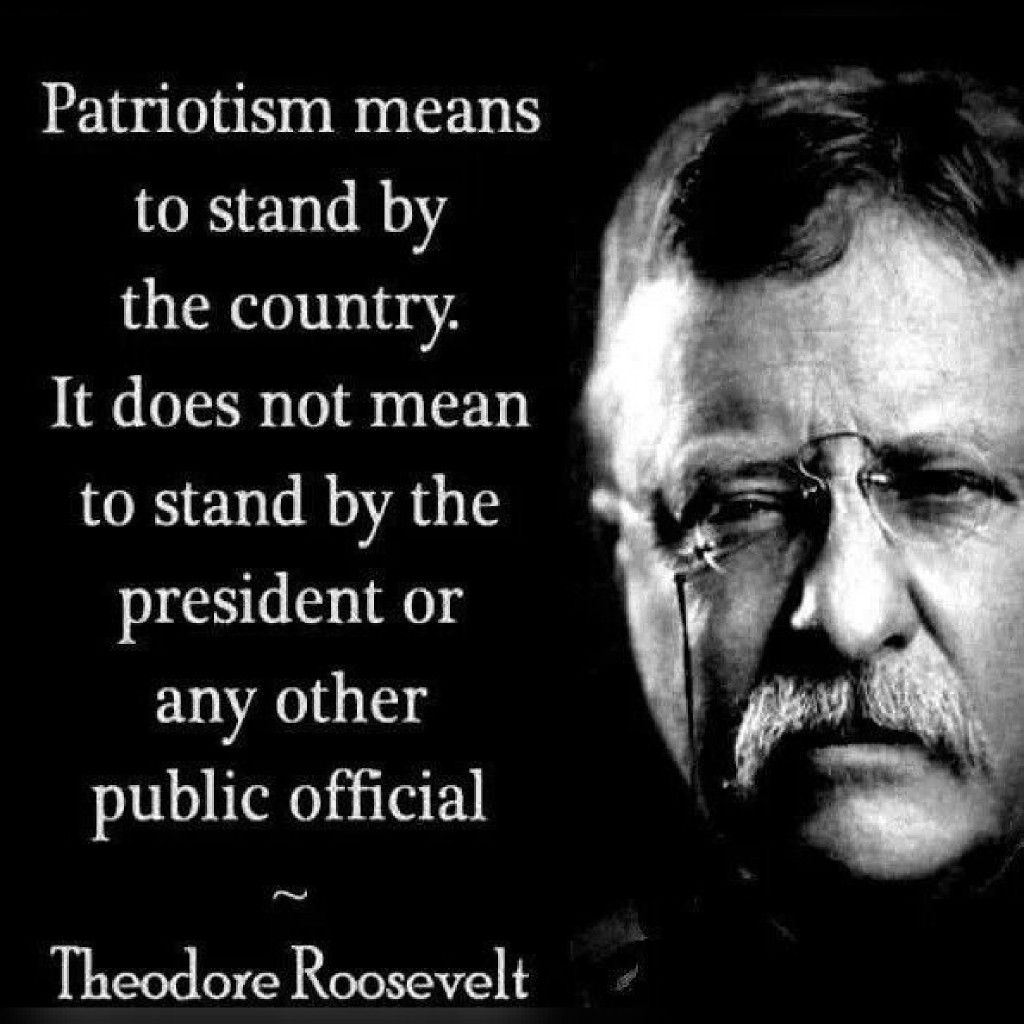
On its face, this quotation from Theodore Roosevelt would seem rather obvious. Indeed, the legitimacy of American democracy rests on the theory that our elected leaders will pursue policies roughly matching their political rhetoric. This honesty requires not just avoiding outright lies, but also hypocrisy, i.e., saying one thing and doing the opposite.

In fact, our recent experience in America shows TR’s principle to be regrettably revolutionary in practice.  Donald Trump’s crude and divisive lies plumbed new depths of political dishonesty. However, the glib hypocrisy of the Obama Administration was the catalyst for the Trump revolution of 2016.   Obama was a master of the art of eloquently claiming one goal while pursuing manifestly contradictory and damaging policies at the same time.  The American people might not always have been able to put their finger on the lie itself but could see how the rhetoric clashed with the policy realities in their daily lives. It is why, contrary to media claims, Obama had the lowest average approval rating of any post- Cold War President prior to Trump.

Sadly, the Biden Administration is adopting the same strategy of dissemblance and hypocrisy. Like Obama in the middle of the 2008 Great Recession, Biden seeks to restructure the American economic system in a way that imposes sacrifices on average Americans but enables the globalist elite to escape similar sacrifices.  Its climate change policies would have the effect of not only eliminating thousands of jobs, but, as this article suggests, appeasing China. It makes the disturbing claim that Biden’s climate change ambassador Kerry is willing to compromise on American security and economic interests in exchange for unlikely and unenforceable carbon emission reductions by the Chinese.  When confronted with the effects of such policies on American workers, he showed his elitist callousness by claiming that oil & gas workers can simply build solar panels. He conveniently ignored the fact that solar industry jobs pay about 20% less than equivalent petroleum industry jobs.

Meanwhile, Biden’s immigration proposal would legalize our de facto policy of unrestricted immigration at the expense of low-income and technical workers, who are disproportionately women and minorities. Many of those are the same heroes and heroines who kept our nation going during the coronavirus pandemic. Nevertheless, the Administration is pursuing a policy that would continue the kind of wage slavery and economic inequality Biden campaigned against (see this previous article). His only response is to invoke the divisive rhetoric of woke politics and income redistribution.  Even longtime liberals are questioning the honesty of these policies in light of the inequality crisis in California.

Loyal readers of this blog will quickly recall my vote for Biden expressed last year and ask if it was worth it. I still believe he was the best of a painful choice, which was confirmed by the Capitol riot and Trump’s petty sabotage of the Republican campaign in the Georgia runoff elections. The Democrats’ narrow control of Congress still gives nationalists a realistic chance to highlight Biden Administration hypocrisies so the American people can weigh in and decide if this is really what they voted for.  This site will try to help by analyzing and publicizing the contradictions and hypocrisies, concentrating on three areas – infrastructure, especially related to climate adaptation, immigration and political reform.  Please let me know of any other issues you would like to see covered as well.