
Domestic Policy, Government, Immigration, Uncategorized

A Blow for Immigration and Governmental Reform

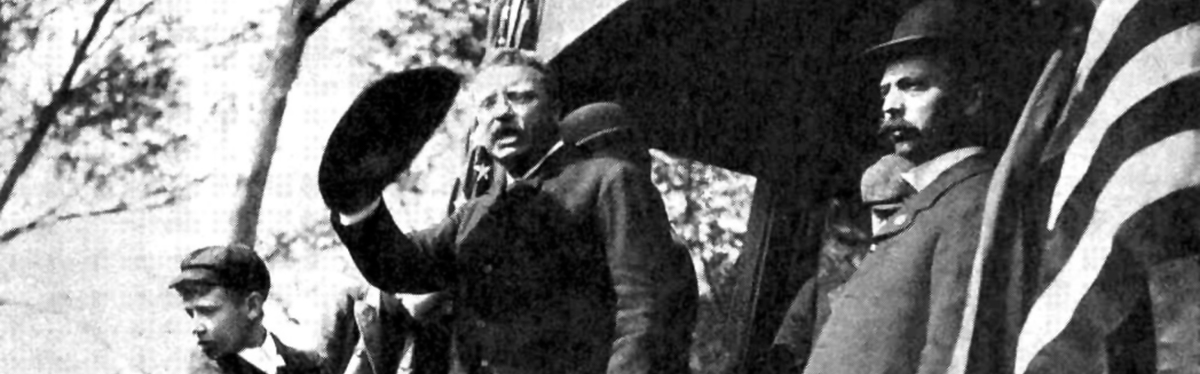
This country will not be a permanently good place for any of us to live in unless we make it reasonably good place for all of us to live in.

Theodore Roosevelt

A federal district court in Houston has struck down the Obama Administration’s Deferred Action for Childhood Arrivals (DACA) program and its companion for parents of those children. Specifically, it held that the program was an administrative rule making required to follow the notice and comment process of the federal Administrative Procedures Act (APA).  The failure of the Obama Administration to follow this process rendered the program illegal. CNN helpfully included a copy of the Order and Opinion of the court here. The decision is not only a step towards effective immigration reform, but also strikes a blow against the power of the administrative state. 

The court essentially took up the issues ignored in the US Supreme Court’s Regents of the University of California opinion that I previously discussed here.  This decision struck down the attempted rescission of the DACA program by the Trump Administration as itself violating the APA while glossing over the illegalities in the original rulemaking. This new federal court opinion turns the tables and focuses on those infirmities, noting that the Supreme Court itself held that DACA was not simply a passive non-enforcement policy. Instead, it conferred affirmative immigration relief such as the right to receive a work permit and the right to travel abroad without permission.  It did so despite admitting in the original memorandum that only the Congress could confer affirmative immigration relief. The district court’s opinion built on Justice Clarence Thomas’s dissent in the Regents opinion by highlighting the real reason for the program – the inability of successive Presidents to unite the Congress and country around an immigration bill that included effective limits and enforcement as well as the necessary relief for longtime residents. 

The district court was mindful of the hardships an immediate cessation of the program would cause to current participants and simply prohibited further expansion of the program for the time being. The Biden Administration has announced that it will appeal the order and urged Congress to pass a bill fixing the problem. The administration’s latter position is correct. Both political parties need to look beyond the twin corruptions of identity politics and corporate contributions to pass a comprehensive immigration reform legalizing the status of the “Dreamers” and creating real enforceable limits on future immigration as I advocated in this post. A truly comprehensive answer to the immigration crisis would be a new beginning for insuring the American Dream for both lifetime citizens and immigrants alike. 
Domestic Policy, Government

Abolish the Police, not the Policeman

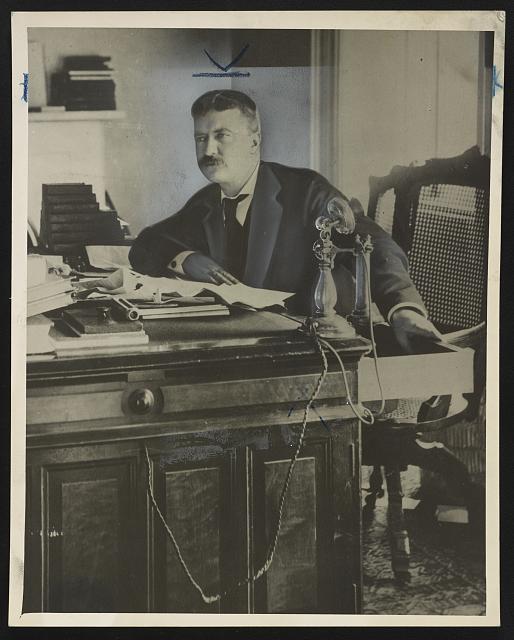
Theodore Roosevelt as New York City Police Commissioner

If the police power is used oppressively, or improperly, let us by all means put a stop to the practice and punish those responsible for it; but let us remember that a brute will be just as much of a brute whether he is inefficient or efficient. Either abolish the police, or keep them at the highest point of efficiency.

The Works of Theodore Roosevelt (1917.) Scribner’s Mem. Ed. XXI, pg.73; Nat. Ed. XIX, pg. 63

After the guilty verdict in the Derek Chauvin case, I am republishing this article from 2020 on how Theodore Roosevelt might have approached the modern policing crisis. Unfortunately, the lessons still ring true even after a year.

In the wake of the killing of George Floyd, this blunt observation of Theodore Roosevelt is particularly timely and provocative. As police commissioner of New York City, TR knew the difficulty of preserving the legitimacy of a police force in an ethnically diverse city.  Police corruption, whether in the form of bribery or brutishness, sapped that legitimacy and needed to be swiftly and certainly punished.  He also knew that such corruption often arose from systemic failures in society that were foisted on the average police officer to solve.  Whether the slogan is Roosevelt’s or today’s “defund the police” chant, any sustainable police reform movement must address these past policy failures.

The Militarization of Police Departments

After the 9/11 attacks, the federal government decided that every metropolitan police department needed to be prepared to deal with a terrorist attack. This ended a successful era of neighborhood policing based on increasing the number of police officers walking a beat or otherwise regularly connecting with city residents. Instead, cities stocked up on military-style equipment, which had the effect of separating the police from the public and glorified the use of force over early intervention. Hollywood then further glorified it through television shows like “SWAT” and a host of police buddy movies.  This resulted in a culture that ruled by fear instead of respect.  It is past time to reverse course and reinvent the policeman as a community problem solver and give him or her the necessary support and resources.  To do so, though, we must face another reality.

The Reduction in City Police Forces

The calls to abolish or reduce police forces are gratingly ironic in light of Bureau of Justice Statistics showing that two-thirds of the 50 major police departments reduced the number of officers per capita over the last two decades.  Smaller police forces were cheaper because of the lower personnel cost, as opposed to riot gear and other equipment that do not demand employee benefits. We cannot implement neighborhood policing without more policeman, which requires more funding, and soon.

It is equally ironic that the relevant model may be the “surge” in military force that temporarily pacified Afghanistan and Iraq.  The federal government should fund a similar surge in the number of city police over the next ten years subject to strict rules to insure it results in more and better-trained officers on the beat. Cities would then be expected to pick up the funding for this increase afterwards.  Accepting the higher federal and local taxes necessary to achieve this more humane and sustainable form of policing would be the most concrete way to show our commitment to remedying past police abuse of poor minority communities.  However, even this change will be insufficient if we neglect another crisis in law enforcement.

The Expansion of Criminal Law

Roosevelt’s police force was plagued by bribery caused by the attempt to enforce Sunday blue laws that were deeply unpopular among poor immigrants and which he personally opposed. Today’s police officers are asked to not only keep order, but also enforce a myriad of new financial and economic rules.  George Floyd was being arrested on suspicion of passing a counterfeit $20 bill, which is a federal, not local, crime.  Eric Garner of New York died while being arrested for failing to pay the state cigarette tax. If the police become identified with laws that have little legitimacy in their communities, they will inevitably face resistance and a lack of cooperation in enforcing other laws.  Many cities already refuse to assist in enforcing the federal immigration laws in order to encourage illegal immigrants to cooperate with police in preventing violent crime. 

The accretion of federal, state and local criminal laws over the years has placed all of law enforcement in an increasingly untenable position. All levels of government should conduct a thorough review of their criminal codes with the goal of either repealing minor criminal statutes, converting them to civil violations or developing new enforcement methods.  Local police could then return to enforcing laws that preserve neighborhoods rather than disrupt them.

Conclusion

For most of this year, our nation has been concentrating on breathing freely by avoiding the coronavirus.  Both the yearning to reopen and the George Floyd protests show that breathing freely is not enough for Americans. We must also be able to breathe free. Resisting arrest is never excusable, but resistance will occur more frequently if Americans believe they are not free.  Blaming the police without examining the policy failures that affect all of us regardless of color will only sow the seeds of more resistance and a less efficient police force.

China, Defense Policy, Foreign Policy, Nationalist Theory, New Nationalism News, Politics

The Debut of New Nationalism News

Today marks the beginning of a new feature of this website called New Nationalism News, which will curate stories from the last week that illustrate world nationalism and the strategies American nationalism should use in response.  To those of you who are familiar with the RealClearPolitics site (www.realclearpolitics.com), think of this as RealClearNationalism.  You can also follow these posts in real time by joining the associated Facebook and Twitter sites where they are also posted. Simply click on the buttons on the bottom and then follow my New American Nationalism Facebook page or join my Twitter feed.  Please feel free to suggest articles for the week as well.  

This weeks stories illustrate the increasing nationalism in Asia and especially in China.  I provide a short introduction to each for better reference and to give you my interpretation of their significance. 

While US and Western globalists tout international fraternity, Asia is requiring its citizens to reject transnational ties and choose the nationalism of their countries instead.

https://www.cnn.com/travel/article/asia-dual-citizenship-intl-hnk-dst/?utm_medium=40digest.7days3.20210315.rank&utm_source=email&utm_content=&utm_campaign=campaign

Meanwhile, China has built the largest navy in the world.  TR would understand the significance of this to our allies in Asia and have nothing but cutting insults for liberal globalists who suggest cutting the defense budget. https://www.cnn.com/2021/03/05/china/china-world-biggest-navy-intl-hnk-ml-dst/index.html

In contrast to the Biden Administration, China refuses to sacrifice its growth goals on the altar of the Paris Accord.  As the article points out, this will allow them to increase emissions through 2030 and practically prevent achievement of effective CO reductions.  Adaptation must become the most important element of our response.https://www.bloomberg.com/news/articles/2021-03-06/china-s-top-leaders-leave-tough-climate-decisions-to-bureaucrats?srnd=premium

The final story for today is about how China is diversifying its imports of critical materials to allow it to use trade as a weapon.  In particular, it is concentrating on sourcing its imports from fellow autocratic regimes. The US needs to pay more attention to its supply chains of raw materials as well.

https://www.cnbc.com/2021/03/18/china-is-building-up-its-ability-to-weaponize-trade-new-report-says.html?utm_medium=40digest.7days3.20210318.rank&utm_source=email&utm_content=&utm_campaign=campaign