2022 Election, Domestic Policy, Infrastructure, Politics

2022 American Nationalist Voting Index – A Strong America

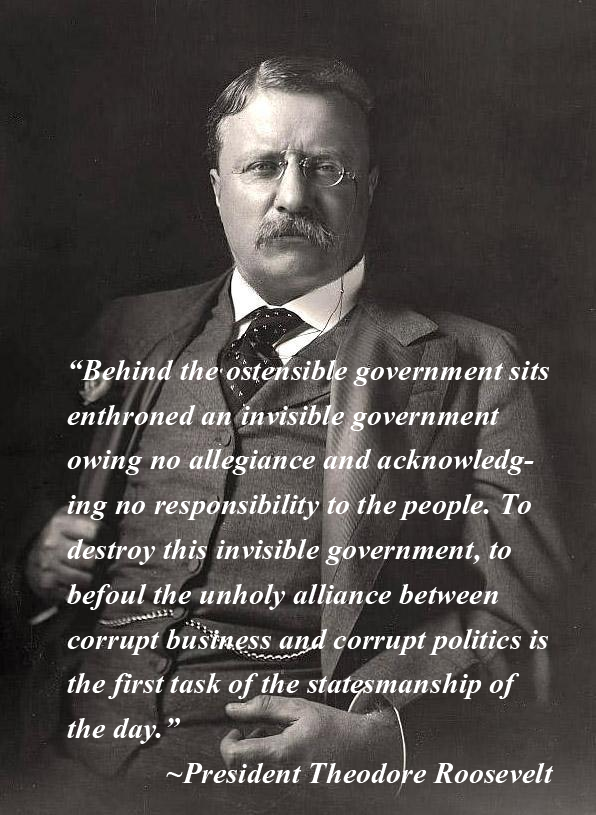
The USS Theodore Roosevelt is a proud symbol of American strength and the selfless service of our armed forces in preserving our freedom. However, a nation’s true strength is found in the commitment of its people to their fellow citizens and their nation as a whole. This is doubly true of the America of TR, who stood for both democracy and equal opportunity for all. While it was often an ugly process, Congress actually considered and occasionally passed legislation consistent with TR’s ideals and deserved the support of American nationalists.

Congressional Gold Medals for Capitol Police

This Congress convened amidst an attack by a rebellious mob that came perilously close to overthrowing a newly elected president during the certification of the electoral count. The Capitol Police bore the brunt of the attack and defended congressmembers with conspicuous bravery. The House and Senate recognized their service to the nation by voting to award them Congressional Gold Medals.The Senate vote was unanimous and the House roll call vote can be found here:

https://clerk.house.gov/Votes/2021161

Every true American nationalist should agree and salute them as well.

Bipartisan Infrastructure Bill

We have lived with the decline in our national transportation infrastructure for decades. As I discussed in this previous post, Congress finally took action when it passed the Infrastructure and Jobs Act (HR 3684) more commonly known as the Bipartisan infrastructure bill. The links to the House and Senate Votes are

House Vote : https://clerk.house.gov/Votes/2021369

Senate Vote: https://www.senate.gov/legislative/LIS/roll_call_votes/vote1171/vote_117_1_00314.htm

CHIPS Act

The COVID pandemic exposed dangerous gaps in the supply chains of our basic industrial materials and human needs products.  The shortage of domestically produced computer semiconductor chips that are key components of almost every product led to the passage of the CHIPS Act (HR 4346), which will jump start the production of them in the US. The bill also makes important investments in research and technology education. Here are the links to the votes in the House and Senate:

House Vote ; https://clerk.house.gov/Votes/2022404

Senate Vote – https://www.senate.gov/legislative/LIS/roll_call_votes/vote1172/vote_117_2_00271.htm

Economic Security

Congress voted on several other bills to address supply chain shortages threatening our economy. HR 4476 would have created an Office of Trade & Economic Security in the Department of Homeland Security charged with monitoring critical supply chains and coordinating a response to potential issues.  It passed the House but died in the Senate. The House vote can be found here:

https://clerk.house.gov/Votes/2022112

Finally, the House and Senate considered a bill called the America COMPETES Act, a predecessor to the CHIPS Act which would have created a Committee on National Critical Capabilities to monitor and prevent the transfer of vital American technology to China and other foreign adversaries. The bill passed in both Houses of Congress, but differences in the text were never resolved. The two votes can be found here:

https://clerk.house.gov/Votes/202231

https://www.senate.gov/legislative/LIS/roll_call_votes/vote1172/vote_117_2_00109.htm

Conclusion

Theodore Roosevelt was a paragon of personal resilience and knew America needed to be resilient to be a truly strong (see this previous post). As we head to the polls, let us reject many politicians calls to division and ease and, instead, recommit ourselves to building the nation and the people that TR envisioned. Remember to vote and God bless America!

Foreign Policy

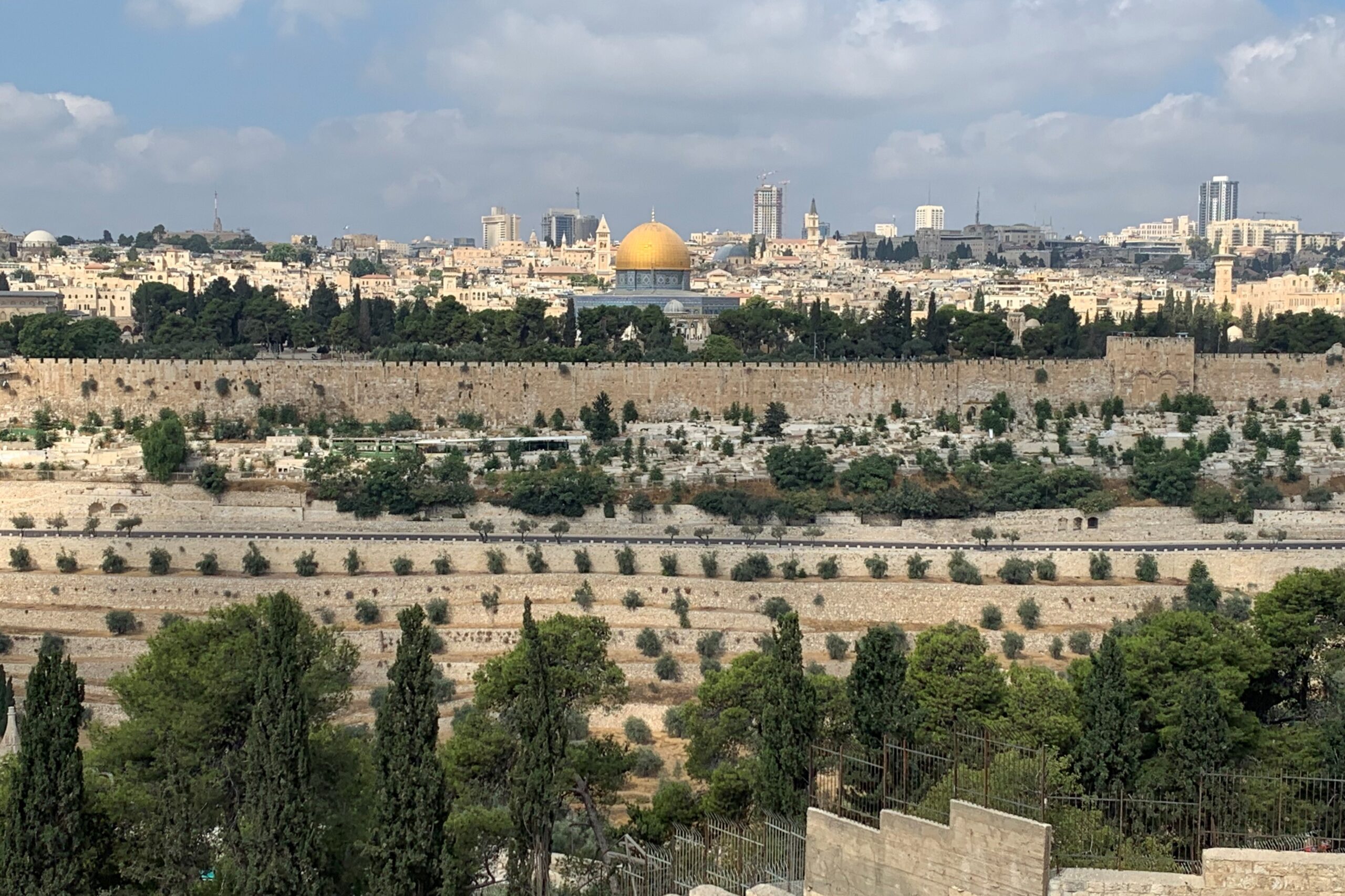
Dominus Flevit

Source: Author

Coming within sight of the city, He wept over it and said “If only you had known the path to peace this day, but you have completely lost it from view”.

Luke 19:41-42

This iconic photo of modern-day Jerusalem was taken during my pilgrimage to the Holy Land at the spot where Christians believe Jesus Christ wept over the city’s coming destruction by the Romans.  The golden dome is the Dome of the Rock, where Muslims believe Muhammad ascended to heaven. What is less obvious is that it is built on the Temple Mount, which is where the Jewish temple used to stand before the city’s destruction. Behind the Dome of the Rock is the Church of  the Holy Sepulchre, the site where Christians believe Christ died and rose from the dead. The wall immediately in front of the Golden Dome was built by the Ottoman Sultan Suleiman the Magnificent on top of the remnants of the walls of the former Byzantine, Roman and Jewish rulers of the city.

The photo illustrates the sad history and current reality of Israel, Palestine and the entire Middle East. Whether it was the Persians, the Romans, the Turks or others in between, the region has been the crossroads of the world and the battleground of political and religious empires for millennia. Each outsider won a temporary victory only to be displaced by later, more powerful newcomers.  Like the layers of Jerusalem’s wall, the rivalries and resentments from these conquests run deep and are part of the everyday life of the people.

Recent history shows that progress in untying this Gordian knot of conflict only occurs when one of the leaders in the area courageously and publicly acts. The Camp David Accords hosted by President Jimmy Carter that produced the Egyptian-Israeli peace treaty were possible only after President Anwar Sadat’s courageous trip to Tel Aviv to meet Israeli Prime Minister Menachem Begin.  This peace has now held for over four decades. In contrast, The Oslo Accords of 1993 that created the Palestinian Authority were initially negotiated in secret between Israel and the Palestinian Liberation Organization rather than through a similar public initiative. While the agreement resulted in the creation of the Palestinian Authority, the corresponding lack of commitment on both sides has been reflected in Israel’s settlement policy and the continuing attacks on Israel by Hamas and others terrorist groups.

When weighed along with the disastrous effects of our military interventions in Lebanon, Iraq and Syria, the lessons become clear.  The US cannot bring a peace to the Middle East unless the parties are first willing to take the risks of peace themselves   Worse, direct military intervention simply adds a new layer on to the ancient piles of resentment and conflict. This land deserves our prayers for peace, but realism and a certain amount of humility must necessarily temper America’s involvement in the region.

Domestic Policy, Environment, Uncategorized

Climate Change Realism

The debate over climate change policy has historically been dominated by globalist proposals that impose a crushing socioeconomic burden on the United States and weaken us by endangering our energy reliability.  Meanwhile, China, Russia, and the developing countries of the global south would continue to prioritize strengthening their economies and national power even at the cost shamelessly increasing their carbon emissions. As I discussed in this post, the American nationalist approach of Theodore Roosevelt would balance environmental responsibility, national security, and economic fairness to achieve realistic carbon reductions as well as the necessary adaptations to the changing climate.

The (unfortunately misnamed) Inflation Reduction Act recently negotiated by Sen. Joe Manchin and Democratic Senate leadership is a step in the right direction despite its various flaws. It appropriates $380 billion over ten years to spur production and installation of clean energy technology,  as opposed to the original budget-busting $1.78 trillion of President Biden’s Build Back Better proposal. At the same time, it contains tax credits for nuclear power and clean hydrogen.  It also recognizes that oil and gas must remain part of the energy mix for now by opening up off-shore and federal lands for drilling (for an in-the-weeds analysis of the energy provisions, see this link to one law firm’s analysis).

There is, however, a cost.  To be at least deficit-neutral, it primarily relies on the following revenue and tax increases:

Authorizing Medicare to negotiate and purchase certain prescription drugs in bulk for Medicare drug plans

Creating a 15% minimum corporate income tax

Strengthening IRS enforcement efforts

Imposing a new fee on excess emissions of methane from oil and gas facilities

Tightening the loophole that taxes investment manager’s income at capital gains rates instead of ordinary income rates.

All of these are welcome changes in tax and spending policy in and of themselves. The Committee for a Responsible Federal Budget estimates the legislation will result in a small 155 billion reduction in the budget deficit over the next ten years.  

The bill could have been better in two ways.  While it imposes domestic content and prevailing wage requirements on clean energy producers, a more robust tariff to support domestic producers and prevent Chinese predatory pricing should have been added. As even the New York Times admits, the bill also allocates far too little to expanding and modernizing the transmission grid to support large scale energy projects so important to achieving energy reliability. Indeed, it seems to favor rooftop solar and other forms of distributed generation over central generation such as nuclear and gas-fired generation and wind farms that provide crucial backup generation.  The Biden Administration has promised Sen. Manchin that the permitting process for such projects will be streamlined to encourage transmission projects in future legislation. 

Nevertheless, the bill meets Roosevelt’s sobering realism expressed above by beginning the process of reducing carbon emissions here at home, but not at the price of economic dislocation or strategic weakness.  Much more needs to be done, especially in the realm of climate adaptation.  However, America would retain the leadership in environmental stewardship that TR established while refraining from sacrificing its strength.  This is the kind of national responsibility he would have enthusiastically supported.