Political Reform, Politics

For the People or the Elite? -The Trojan Horse of Internet Contributions

Optimism is a good characteristic, but if carried to an excess, it becomes foolishness.

Theodore Roosevelt

Several years ago, my computer was hacked at the Denver International Airport. Shortly afterwards, I started receiving emails addressed to “Ricot Claude” (not anywhere near my name or nickname) from Democratic party campaigns and affiliated groups hounding me for contributions.  Many of them came through a super-PAC called ActBlue.   The experience exposed a major problem in campaign finance regulation that could be a source of the same kind of “dark money” targeted elsewhere in the For the People Act.

The fundamental flaw of the current system is that it brands the contributors, not politicians, as the culprits who need regulation. At the same time, the Federal Election Commission has almost no resources to chase down and enforce violations by errant contributors.  Campaigns and PACs need only use their “best efforts” to determine whether a contribution is legal, which is defined as only requesting the basic identifying information required by disclosure reporting. See 11 CFR 104.7.  The committee can rely solely on the representations by the contributor and no independent verification of the source of the contribution is required. The only exception is the presidential campaign matching fund program. See 11 CFR 9034.2. Candidates may only receive matching federal funds for contributions evidenced by a “written instrument”.  This is specifically defined as a check, a credit card accompanied by a signed transaction slip or, in the case of an Internet contribution, an electronic record transmitted by the cardholder with a copy of the credit card number and the name of the cardholder. Thus, the candidate automatically has sufficient independent information to verify the identity of the contributor.

In 1995, the FEC ruled in Advisory Opinion 1995-9 that contributions via the Internet were subject to the lax reporting standards applicable to most committees and did not need to be independently verified (see the answer to Question No. 4).  This may explain why so few presidential candidates use matching funds anymore and rely so heavily on Internet contributions instead. This opinion also authorized the use of outside financial contractors to solicit and manage the contribution process.  Since then, a cottage industry of third party vendors unregulated by the FEC has arisen to solicit, raise and manage contributions on behalf of political committees (see this example of Paypal’s service). Only these vendors have the information about the credit card or other source of a contribution.  They have no obligation to cross-reference the name on the credit card or Paypal account or other source against the name reported to the committee or report any discrepancies to the committee.  

Thus, I could have used the system to make illegal contributions under the name “Ricot” with very little likelihood of consequences.  A corporation or foreign national could have done the same.  The potential for abuse was documented in a forensic audit of ActBlue’s contributions by former Kansas Attorney General Phil Kline, who reported that fully 48% of ActBlue’s contributions came from the unemployed while its Republican counterpart WinRed had only 4%.  It also showed how gift cards can be used to game the system. 

This loophole needs to be plugged before it becomes a floodgate of foreign and other dark money into political campaigns.  One way would be to impose on all political committees the documentation and verification rules required under the presidential matching funds program.  In the alternative, the FEC should have the power to regulate outside vendors that manage contributions for committees and impose the same kind of verification rules applicable to the private sector.  A model for such a program can be found in the Federal Trade Commission’s Identity Theft Prevention Rules, which require certain creditors to check transactions against red flags of identity theft.  In the absence of congressional legislation, the FEC should require political committees to use such mechanisms to verify the source of the contribution or require their vendors to have such a system and actively audit the vendor to insure it is enforcing the program.

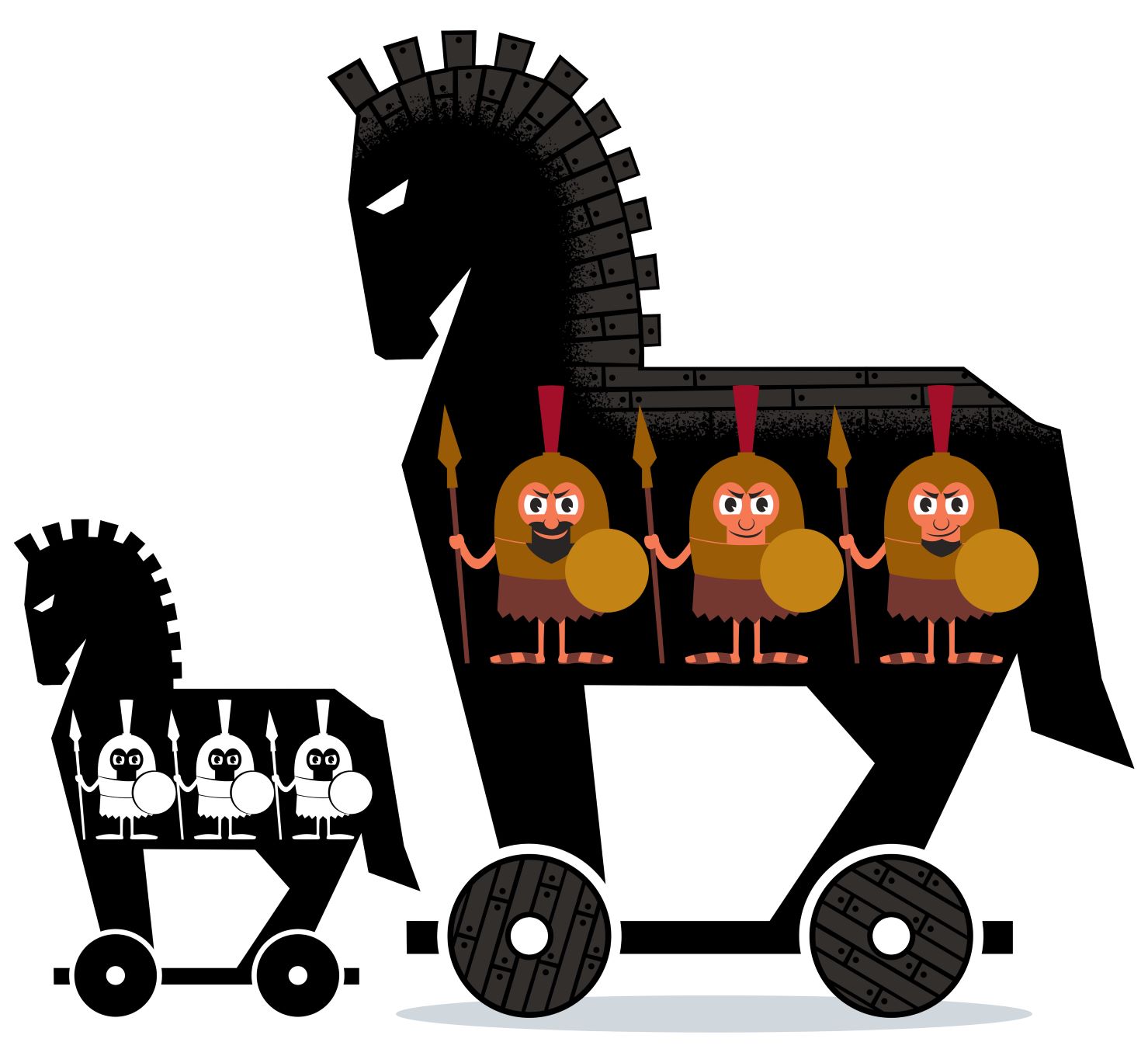
Internet contributions have been hailed as the average American’s answer to the influence of corporate contributions and dark money.  As Theodore Roosevelt said, we should not let that optimism cause us to repeat the mistakes of the Trojans in the Iliad and unwittingly unleash the same kind of abuses we want to prevent.  The For the People Act or any similar campaign finance reform should be amended to control against this threat.  Otherwise, we may find that the plugging of one dark money loophole will simply cause it to spring up in a more corrosive and damaging form.     

Political Reform, Politics

For the People or the Elite? – The Manchin Compromise

Theodore Roosevelt’s maxim is the essence of successful politics since it accepts the reality of compromise.  Thankfully, Sen. Joe Manchin of West Virginia appreciates TR’s maxim and prevented the ideologues on both sides from torpedoing necessary electoral reform.  He has proposed only a set of principles at this point but they adopt many of the good provisions endorsed in my previous post and add new ones that improve on the more extreme provisions. 

First, the campaign finance section includes the DISCLOSE Act and Honest Ads act sections of the bill that would open dark money contributions to the light. No longer could large last-minute contributions be hidden from view until after the election.  He also strengthens enforcement of the Foreign Agent Registration Act and would address cybersecurity risks in election machinery. He also would make Election Day a holiday so more Americans would be able to participate in the process.

Sen. Manchin also takes the best of the voting rights provisions of the bill and adds a voting identification requirement that would allow utility bills and other less onerous methods to be used to verify identity. He would mandate a two-week early voting period that is already the practice in many states as well as automatic registration through drivers license offices. At the same time, states would be allowed to police their voter registration rolls by utilizing current interstate and federal mechanisms.

The two most controversial provisions deal with partisan gerrymandering and resuscitating the Voting Rights Act to control discrimination.  The original bill would not only ban partisan gerrymandering, but would impose compulsory one-size-fits-all processes in all states. For example, my home state of Montana just gained a congressional seat and now will have two seats. Drawing the lines for those two districts will be much more straightforward than in my former home of Texas, which will have 35 seats.  Manchin’s process for preventing gerrymandering is not yet clear, but envisions using objective computer models to reduce the ability of parties and incumbents to game the system.  

Rather than impose detailed prescriptive regulations, Manchin proposes a more flexible way to prevent voting rights violations through a revised version of the John Lewis Voting Rights Act, named after the late civil rights activist and congressman.    It would impose federal pre-clearance of electoral changes on any state and local jurisdiction with more than 15 voting rights violation in the previous 25 years. At the same time, he would require sufficient judicial review before any such finding could be made and create a way for a jurisdiction to end the pre-clearance process.  This would create a realistic enforcement mechanism against any significant future abuses. 

A copy of Sen. Manchin’s proposals is attached below and another analysis of their implications can be found here.  The senator’s compromise is a step in the right direction, though it still could be improved in some areas. My next post will discuss why contributions solicited over the Internet are subject to abuse under current law and what could be done to prevent it.

2020 Election, Politics

An American Nationalist Voting Index – Draining the Swamp

This is part of a series examining the issues in the presidential election. To see other articles in the series, click on the “2020 Elections” link on the Home page

Score

Biden 0 Trump -1

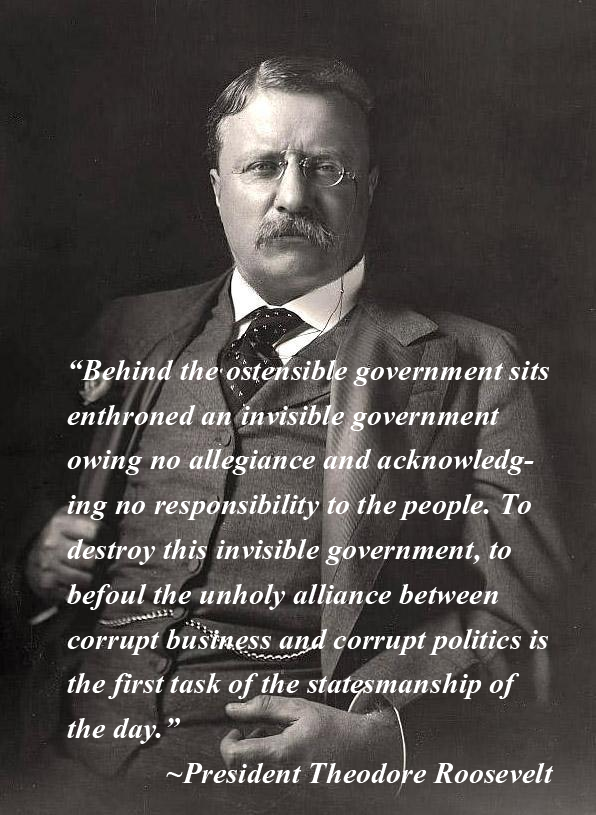
Trumps victory in 2016 was powered by a call to “drain the swamp” in Washington, which never consisted simply of campaign reform.  It sought to end the kind of cancer described by Roosevelt – the control of government by a privileged few that subverts the very nature of democracy itself.  We also now know it means different things to different groups.  In this campaign, the call for reform has focused on not just campaign reform, but also on federal administrative and policing changes.  

Campaign Finance Reform

The Citizens United decision and our loophole-riddle campaign finance laws have loosed a flood of money whose origins are opaque and very probably illegal. Democrats introduced a bill that would plug some of those loopholes.  It attempts to limit the impact of Citizens United by requiring disclosure of donations of more than $10,000 from certain non-profits that were previously exempt. It cracks down on digital ad spending on social media platforms by requiring the same kind of disclosure of the source of ads required for television and radio commercials.  The bill also attempts to limit the use of social media for the kind of election interference we saw from the Russians in 2016 by banning campaign contributions from corporations with significant foreign ownership. Finally, it also prevents foreign individuals from purchasing social media ads.  Former Vice President Biden has endorsed these proposals and President Trump opposes them. This earns Biden a +1 and Trump a -1.

However, there is a sleeper issue in campaign finance that has been ignored by both candidates.   If you are like me, your e-mail box has been deluged by appeals for campaign contributions from any number of candidates and partisan political action committees.  They seek contributions of as little as five dollars by simple completion of a form on the Internet and a charge via PayPal or by credit card. While the identity of the donors must be disclosed, there are no rules requiring the verification of their identities.  A former Kansas attorney general recently issued an analysis of the contributions to the ActBlue independent committee’s which raised over $900 million for Democratic candidates.  It showed how ActBlue has gamed the campaign finance system so that the true sources of their contributions is almost impossible to determine. This makes it easy for large donors to break up their contributions or foreign donors to hide theirs.   If Biden or President Trump are really interested in controlling dark money, this loophole must be plugged as well.

Federal Administrative Law Reform

The failure of Congress to address a pressing issue has now become an excuse for forcing action through administrative rulemakings.  As I mentioned in my post on the US Supreme Courts’ s opinion on the DACA rulemaking, current law makes it difficult to control an executive agency’s impulse to fill this perceived gap. This essentially creates a fourth branch of government whose inner workings are known and accessible to only a few.

Federal executive power needs to be reined in through new legislation that

  • Limits agency rulemaking to discrete subjects narrowly delegated to the agency;
  • Prohibit agency action if its impact on the economy or the number of people affected exceeds certain thresholds;
  • Allows more opportunity to challenge a agency ruling and repeal it.

The DACA and Clean Power Plan rules of the Obama Administration show that Vice President Biden is a likely opponent of such reforms.  Meanwhile, Trump has relied on and touted his executive power instead of pursuing legislation to prevent a future president from abusing those powers. President Biden’s’ implied approval of current agency power results in a -1 for him on this issue while Trump deserves only a 0.

Law Enforcement Reform

The death of George Floyd and other African-Americans at the hands of the police and the FBI abuses of the FISA warrant system revealed in the Russia investigation  has highlighted another swamp that needs to be drained – the excessive and unchecked power of law enforcement.  As mentioned in this post, policing reforms must be based not only reducing qualified immunity and other changes in tactics, but also a top-to-bottom review of our law enforcement strategy.

Former Vice President Biden supports proposals to reform police tactics, but never mentions the need for increased funding for the police necessary to do their job of maintaining order in our communities. Meanwhile, the Obama Administration’s acquiescence at the least, and encouragement at worst, of the FBI’s FISA abuses does not inspire any confidence that he would support reform in this area.  These two positions cancel each other out and earn him a zero on this subject. While the Trump Administration is vigorously pursuing the FBI abuses via the John Durham investigation, the President has ignored, and at times demagogued, the police brutality issue, Again, the two positions cancel each other out and thus he also deserves only a zero.

Conclusion

It is truly discouraging that neither candidate shares Roosevelt’s level of concern about the perilous state of American democracy and civil rights. Trump’s failures are particularly galling since his 2016 campaign featured the issue.  It is up to American nationalists to press these issues with congressional candidates and in future elections.