2024 Election, Politics

Confronting a False Choice

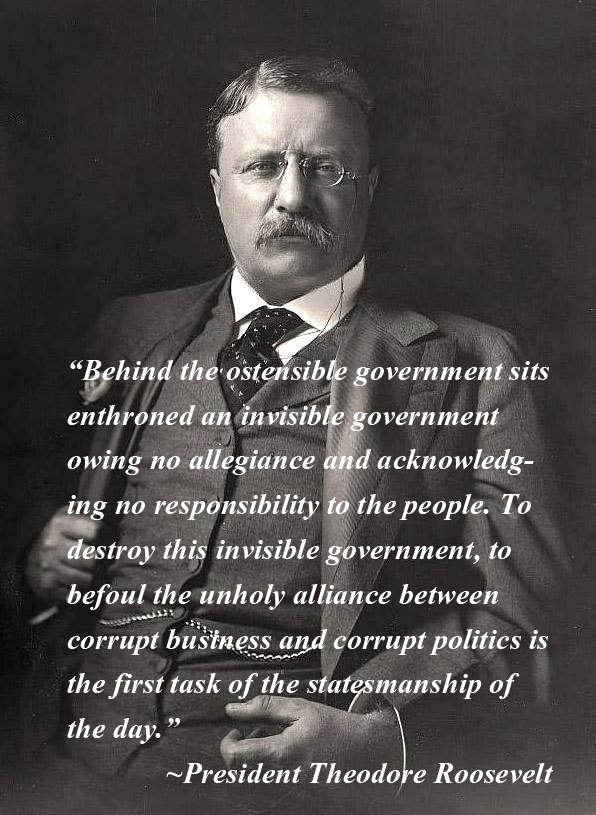
Neither the Republican or Democratic platforms contain the slightest promise of approaching the great problems of today either with understanding or good faith; and yet never was their a greater need in this nation than now of understanding and of action taken in good faith, on the part of the men and the organizations shaping our governmental policy.

Theodore Roosevelt accepting the presidential nomination of the Progressive Party, August 6, 1912

As we approach the 2024 election, the US is in the midst of funding two major wars and trying to effectively deter a third. Ukraine’s defense against the Russian invasion has faltered due a reconstituted and more deadly Russian military as well as the delay in aid. Israel’s war against Hamas is taking a toll on both Palestine’s and Israel’s future.  Meanwhile, China expands its threats in the Western Pacific towards not only Taiwan, but also the Philippines. Here at home, the federal government’s apparent impotence in the face of economic inequality and an influx of 7 million illegal immigrants feeds a disillusion with our constitutional democracy that divides the nation.   

At this perilous time in our history, we enter a presidential election where polls show a majority of voters worry about President Biden’s obvious physical and mental frailties. The only current alternative, Donald Trump, is equally elderly, increasingly mentally unhinged and facing criminal trials in four jurisdictions. If your close your eyes and just listen to the two of them, their campaign messages are identical – the “other guy” is mentally incompetent and an existential threat to democracy. I am no conspiracy theorist (see this), but Biden and Trump increasingly look like mere figureheads for other agendas having little relationship to the real issues facing the nation. The legitimacy of our democracy depends on flushing out those issues, as difficult as they may be, into the open so the American people can decide, not just isolated elites.

Part of Trump’s agenda in this election is obvious.  He is running for his life from the very real possibility of becoming a convicted felon and thus losing not only money, but also his freedom in prison. His first act as President would be to order the dismissal of the federal charges against him.  After this, his motives become murkier.  It may simply be the further enrichment of himself and his family while catering to his supporter’s lowest impulses. Trump has once again taken hard lines against immigration and the border invasion that cannot be achieved without congressional approval. His failure to achieve meaningful long-term reform during his previous stint in office belies the likelihood of any substantive change.  Instead, he talks of being a “dictator for a day”, a goal which shows his utter disregard for the democracy he claims to be defending and inability to unite the nation behind any goal see this.

Meanwhile, Biden appears primarily engaged in trying to hold a fractious Democratic Party together to “save democracy” from a Trump victory at any price. This means that he has to unite moderate and traditionally liberal Democrats with the increasingly powerful democratic socialist or “progressive” base of the party. He tries to paper over the differences by buying their support with billions of federal dollars in flagrant disregard of the effect on America’s long term financial stability.  His foreign policy uses the same strategy, where billions to Ukraine, Israel and climate change projects vainly try to preserve American unipolar hegemony. Meanwhile, he further divides the nation by offering tacit and occasionally vocal support for identity-group grievances against everyone else. But are these the ends or simply a means to insulate an isolated international elite from the consequences of their greed?

This website began as a call to national unity in the face of the rise of nationalism elsewhere in the world and the challenges it creates here at home. James Strock, a member of the Board of Advisors of the Theodore Roosevelt Association, recently pointed out that half of the world will be voting in elections this year and, whether it is the US, Russia, or India, it is really nationalism, not democracy, that is on the ballot. He correctly argues that only a genuine American nationalism that addresses our own divisions while respecting the differences of other nations can renew our democracy and enable us to succeed in an increasingly multipolar world (See this post on his “ The Next Nationalism” Substack). Building such a modern American nationalism will require a clear understanding of the choices we must make as a people in the reality of the current world. As we approach the upcoming elections. I will be highlighting the choices we Americans must face. 
2022 Election, Foreign Policy, Politics, Uncategorized

2022 American Nationalist Voting Index – Speaking Softly

The foreign policy debate has been dominated by the reaction to the Russian invasion of Ukraine and its effect on our relations with the rest of the world. As I mentioned here, TR’s heart, soul and perhaps body would have been with the Ukrainians as they defend their independence against Vladimir Putin’s brutal attack. However, a realist foreign policy would recognize that the US and the world have other important interests as well (see this previous post). It is not appeasement to keep the door open to the potential for negotiations for a peaceful end to the war, if simply because this is how almost all wars end. Meanwhile, the challenge of China and Central American stability potentially impact the American future as much, if not more, than the outcome of the war in Ukraine.

The most important foreign policy issue, though, arises here at home.  TR was a strong proponent of presidential power, but the abuse of the war power by recent presidents has led us into forever wars far afield from our core interests. Our continued involvement in Iraq is a classic example.  The House has considered a resolution to finally repeal the Bush Administration’s 2003 Authorization for use of Military Force under the War Powers Resolution.  The only record vote occurred in the House of Representatives and can be found here

https://clerk.house.gov/Votes/2021172

The resolution needs to be strengthened to prevent further abuses (see here), but cleaning up the past excesses is at least a start. 

Not much further from home lies the instability in Central America, which has fueled the immigration crisis. Congress passed a bill to address one aspect of the crisis through strengthening the fight against corruption in Nicaragua, which the former Sandinista guerrilla leader Daniel Ortega has turned into a family dictatorship. Those votes can be found at

S 1064 – Reinforcing monitoring of corruption & Human rights in Nicaragua

https://clerk.house.gov/Votes/2021354

The oppression of China’s Uighur minority is just one example of Chinese President Xi Jin-Peng’s increasingly dictatorial rule. Indeed, it is not only a symbol of the brutality of the regime, but also its cynical mercantilist economic policy to monopolize the solar power and clean energy industries (see my previous post on the subject here).  HR 6256 imposes importation limits on goods produced using forced labor in China, especially in the Xinjiang Uighur Region, and imposes sanctions related to such forced labor. It was passed by a unanimous voice vote in both the Senate and the House and has been signed by the President. It is one of the few examples of when politics did stop at the water’s edge, enabling Congress to act across party lines to defend both human rights and our own economic strength.

2022 Election, Political Reform, Politics

2022 Nationalist Voting Index – Political Reform

Longtime followers of this site will remember the American Nationalist Voting Index developed during the 2020 election to compare the two main presidential candidate’s positions on key issues. This series of posts will attempt to craft a similar list of nationalist issues for the upcoming midterm elections. 

We begin with the one most dear to Theodore Roosevelt himself – preserving and broadening our democracy to  give the average American an effective voice in Washington.  At a time when the durability and even the legitimacy of American democracy has been questioned, political reform is not merely desirable, but critical to insuring our strength here at home and our credibility as a champion of freedom abroad.

Freedom to Vote Act

This bill started out life as the “For the People Act” and proposed significant and important reforms in campaign finance, voter registration and rights, lobbying rules, election integrity and congressional ethics.  You can see more of my analysis of it under the “Politics – Political Reform “ tab on the website. Thanks to Sen. Joe Manchin of West Virginia, the bill was amended to eliminate many of the more overreaching provisions. Unfortunately, congressional ethics reform was one of the casualties of the process. However, as I discussed here, the Manchin compromise incorporated the best of the other reforms and deserved support from American nationalists.

Sadly, while the bill passed the House in February of this year, it failed in the Senate.  Your House member’s vote on it can be found at this link (ignore the reference to a NASA appropriation. If you click on the bill number, it will take you to the Freedom to Vote Act:

https://clerk.house.gov/Votes/20229 

In the Senate, a motion to bring the bill to a vote failed and your Senator’s position can be found here

https://www.senate.gov/legislative/LIS/roll_call_votes/vote1171/vote_117_1_00420.htm

Ban Congressional Stock Trading

Insider trading by corporate and securities elites has been unlawful for decades, but recent revelations have shown the current rules to prevent similar profiteering by congress members are largely toothless. Several bills to ban stock trading by members of Congress were introduced, but the Democratic leadership in both houses prevented them from coming to a floor vote.

Thus, the only record of congressional support for this reform is the identity of the co-sponsors of those bills. Here is the list of co- sponsors of the House bill (HR 6678, the Bipartisan Ban on Congressional Stock Ownership Act)

https://www.congress.gov/bill/117th-congress/house-bill/6678/cosponsors?r=43&s=1

A similar bill was introduced in the Senate (S 3494, the Ban Congressional Stock Trading Act) and the list of co-sponsors can be found here

https://www.congress.gov/bill/117th-congress/senate-bill/3494/cosponsors

If your House representative or Senator is not on these lists, you may want to ask them what they’re trying to hide.

Electoral Count Act

The horrifying January 6 attack on the Capitol during the 2020 presidential election certification highlighted the weaknesses of the nineteenth century law governing that critical process.  One of the pretexts for the attack was the theory that Vice-President Pence had the unilateral power to reject the results of the election.  This bill clarifies that the Vice-President has no such power. It also prevents frivolous challenges by providing that any objection to a state’s electors must have the support of one- third of each house of Congress. 

This should have been non-controversial. However, it only passed the House and never came up for a vote in the Senate. You can see the results of the roll call vote in the House here at

https://clerk.house.gov/Votes/2022449

A list of the co-sponsors of the companion bill in the Senate can be found at

https://www.congress.gov/bill/117th-congress/senate-bill/4573/cosponsors

Conclusion

TR spent much of his New Nationalism speech attacking the influence of special interests on the political process, comparing its importance to the fight against slavery in the Civil War.  If we are to avoid the modern-day civil war many observers fear, we must reinvigorate our own commitment to democracy to insure it works for all Americans, not just a narrow elite.