

Foreign Policy, Realist Theory

Presidential Military Power

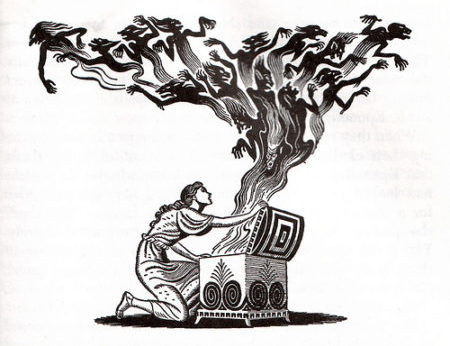
Opening the Pandora’s Box
Presidential Military Power, Part 1

Theodore Roosevelt’s first reaction to the killing of Iranian General Soleimani may very well have been grudging admiration of its audacity and the avenging of American blood on his hands.  Moreover, TR was an unrepentant advocate of presidential power and believed he could “do anything the nation demanded unless it was specifically prohibited by the Constitution”.  Many neoconservatives and some advocates of realism maintain that presidents need such unilateral power in a world where terrorism, cyber-attacks and other low-level threats will be the prevailing warfare of the future. 

Nevertheless, even Roosevelt would have had to concede that Article I of the Constitution vests in Congress, not the President, the power to declare war against a sovereign state.  Over time, presidents have arrogated more and more power to engage in military action with little or no input from Congress or the public. The Soleimani action shows how unrestrained military action can risk committing the nation to a general shooting war without the constitutional constraints envisioned by the Founding Fathers.   

Modern American nationalists who believe in realism and restraint should be horrified at this situation.  It limits the input into such a momentous decision to only a narrow elite without the discussion necessary to achieve the broad consensus required to sustain the commitment to victory.  The last three decades shows that it also encourages interventions in regions such as the Middle East where we have little direct interest. The fact that America has endured as many shooting wars in those 30 years as it did during the Cold War speaks to how such power can be abused and dissipate American lives and treasure to no conclusive  end.  Moreover, these interventions have occurred at the expense of the longer-term strategy necessary to deal with more important challenges such as China.

There is no question that American foreign and defense policy will need to be nimble and precise to effectively deal with cyber and drone warfare, as well as other foreign threats that we can hardly imagine now.  These twin challenges call for a new statutory framework for authorizing national action, military and otherwise.  The old War Powers Resolution adopted in 1973 has proven ineffective at controlling presidential military power and outmoded in managing modern forms of warfare.  It should be replaced by a system that requires varying levels of authorization based on the degree of national commitment necessary to successfully respond to the attack or level of threat.  The next post will outline the elements of such a statute.
Foreign Policy, Realist Theory

Opening the Pandora’s Box

The killing of Iranian General Qasem Soleimani and President Trump’s statement after Iran’s retaliatory missile strike unlocked a Pandora’s box of issues for both the the United States and the world.  All of them had to be dealt with at some point, but it would have been better to have done so through a measured and deliberate diplomatic process where the consequences could be managed over a longer period of time. The choices America must now quickly confront are many, but break down into four categories:

The extent to which American presidents should have the power to commit American military resources against terrorist groups and other nation-states. 

The wisdom and future of America’s involvement in the Middle East.

The future of European relations with America and the rest of the world.

The implications for the balance of power in Asia and the structure of international relations throughout the world.

The American nationalist and realist solution would be to end our involvement in the Middle East quagmire, reject the uni-polar dream of imposing a worldwide liberal hegemony and start to transition to a foreign policy that accepts the multi-polar world of diverse world powers and the dynamic shifting alliances that will be necessary to protect American interests in such a world.  This is truly the new world order.

If American democracy is to succeed in this international system, we must begin building the domestic and international framework necessary to achieve the support of the American public for the policies required to win in this new order.  Americans deserve to hear the 2020 presidential candidates take positions on each of the above issues to insure that the ultimate decisions are primarily driven by the American people and not a distant elite or, worse, by the decisions of hostile nations. This summary will begin a series of posts that will identify some of the hydra-headed choices facing us in each of these four categories.

China, Foreign Policy

A Coming American Century of Shame?

19th century Chinese Opium Den
Chinese Opium Den

It is always better to be an original than an imitation, even when the imitation is of something better than their own; but what shall we say of the fool who is content to be an imitation of something worse? Even if the weaklings who seek to be other than Americans were right in deeming other nations to be better than our own, the fact yet remains that to be a first-class American is fifty-fold better than to be a second -class imitation of a Frenchman or Englishman.

Theodore Roosevelt, True Americanism, The Forum Magazine, April 1894

Chinese Communist leaders constantly justify the legitimacy of the rule by claiming to have reversed China’s “century of shame”. This refers to the 19th century colonial exploitation by the European powers and Japan that carved up much of the country into “spheres of influence”. The most ruthless and shameful episode of this era occurred in the beginning, when Britain fought two wars to force China to accept the importation of opium. This enriched the British at the expense of the misery of millions of Chinese addicts and the Chinese economy as a whole.

Fast forward to the 21st century. Hong Kong residents carry American flags while insisting that the city’s leaders and China honor their previous commitments to expand democracy in the territory. This call to our conscience is then rejected by Apple and other American tech companies, who bow to demands to remove apps that the Chinese government believe aid the democracy movement. Meanwhile, the National Basketball Association apologizes for a tweet of support for the demonstrators by General Manager Daryl Morey of the Houston Rockets after Chinese government protests.

Why such craven subservience? The reason is simple – money. Many Fortune 500 companies earn millions selling their products in China and utilizing cheaper and more compliant Chinese labor to manufacture them. They are thus willing to be co-opted by the Chinese Communist party and thus sacrifice the values of their American employees and customers simply because it preserves those profits

Like the Europeans reduced China to vassalage with the drug of opium, China now seeks to bring America to heel with the new opiate of money. The willingness of American companies to submit to this addiction puts the lie to Fortune 500 CEOs plea to “trust us” to responsibly balance social obligations with shareholder profits (more on this later). It shows that, far from being a benign new entrant on the world stage, China is on the offensive to create its own semi-colonial empire. Indeed, as this excerpt from an National Public Radio feature showed, they may be ruthless enough to use essentially the same opiates forced on them in the 19th century to control poor Americans in the 21st.

This is not an argument for any kind of American intervention. We should remain the advocates of liberty everywhere, but the guarantor only of our own. However, the endurance of this guarantee at home and the future of liberty abroad will depend on whether Americans let the new opiates of money and despair cause our nation to sink into its own century of shame. Or will we hark to TR’s call that it is better to be a first-class American than a second-class Chinese?

https://www.defenseone.com/ideas/2019/10/china-has-begun-shape-and-manage-us-not-other-way-around/160646/?oref=defenseone_today_nl