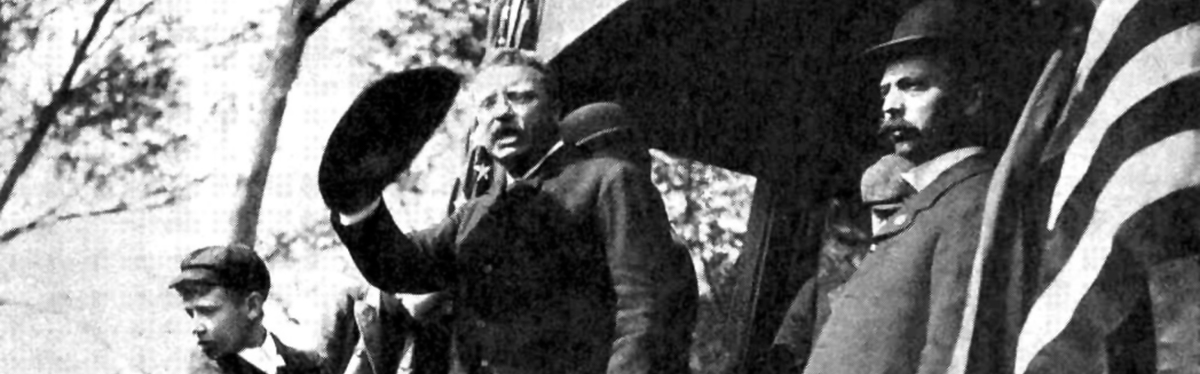

This article missed a real opportunity to craft a modern American liberal nationalism in the tradition of Theodore Roosevelt’s New Nationalism speech. It first attempts to belittle nationalism by conflating the concepts of “nation” and “state”. While the modern-day state is arguably a recent phenomenon, nationhood is almost as old as humanity itself. Statehood is a creature of international law dating back to the Treaty of Westphalia in 1648. States are entities that have sovereignty over territory. Nations, on the other hand, are peoples with a common heritage, usually ethnic in nature. There are states that are not nations and nations that are not states. The African states created after the end of colonialism are the best example of the former and the world is full of examples of the latter, such as the Kurds.
In contrast, the United States was founded not on an ethnic or denominational basis, but on the concept that all were created equal and were endowed with basic human rights. As I mentioned in my previous post on MLK Day, there is, and never should be, such a thing as an ethnic American. While we have struggled, sometimes bloodily, to fully realize this vision, we should never forget how revolutionary the concept was during the monarchical, absolutist nationalism of the 18th and 19th centuries. We fashioned a nationalism that was committed to achieving the American Dream for all our citizens regardless of origin or religion in the hope that other nations would see the benefits of such a society and adopt this vision in their own unique way.
Continue reading “A Globalist’s Failed Attempt to Understand Nationalism”