Coronavirus, Domestic Policy

Coronavirus – America’s Moment

O my fellow citizens, each one of you carries on your shoulders not only the burden of doing well for the sake of your own country, but the burden of doing well and of seeing that this nation does well for the sake of mankind. 

Theodore Roosevelt, The New Nationalism, August 31, 1910

The measures outlined by President Trump to control the spread of the coronavirus at his March 16 news conference certainly are drastic and disruptive. However, a recent article on the medium.com website (https://medium.com/@tomaspueyo/coronavirus-act-today-or-people-will-die-f4d3d9cd99ca) presented both a statistically comprehensive and horrifying prediction of the public health crisis we may be facing as soon as April if we do not stem the tide of COVID-19 cases. As of today, there are 6496 confirmed cases with 112 deaths.  The number of cases are thus matching the hyperbolic increase that the article predicted.  

This crisis challenges not only each of us personally, but also the democratic model that inspired the world from the days of the American Revolution.  As Americans, we need to pull together and help our country triumph over this challenge and show how a free people can unify to defeat it. In addition to the precautions announced on March 16, here are some other things to consider. 

The article warns that our current health care infrastructure may quickly be overwhelmed by  serious COVID-19 cases.  To close this gap, people who are otherwise healthy should consider making themselves available to volunteer at hospitals and other facilities to assist health care professionals.  Another alternative is to provide child care for health care workers whose children are at home alone due to school cancellations or extended work hours. You could also become a delivery driver helping to deliver food to mild home bound COVID-19 sufferers.   Employers should support such volunteerism from those currently working from home and universities should encourage students to participate. Churches, state and local authorities could help by establishing easily-accessible on-line lists of potential volunteers.  Hopefully, we will  have distributed enough tests by then to clear those volunteers.  In any case, each of us will have to evaluate our ability to positively contribute to the response. 

In his book Democracy in America, the French author Alexis de Tocqueville marveled at the unique spirit of volunteerism he saw in his travels around the country. China is attempting to hide the early mistakes of its response by touting the later success of its heavy-handed totalitarian controls. They hope to use this to promote their form of government as a model for the world. In fact, they engaged in a four-month coverup of the outbreak because, like most dictators, they are inherently afraid of the truth. This cost thousands of Chinese lives and delayed an effective world response.  We must counter Chinese propaganda by showing that a free nation like America can be demonstrably more successful in dealing with such a crisis. Now more than ever, the future of our American values and model of government is up to each of us. 

Coronavirus, Domestic Policy

Coronavirus – A Challenge to All Americans

Controlling the COVID-19 coronavirus pandemic will require Americans to unify behind measures necessary to achieve victory over the disease. Panic is unnecessary, simply because America knows how to rise to this challenge and has overcome similar ones in the past.  

This article from the Scientific American magazine’s website (https://blogs.scientificamerican.com/observations/preparing-for-coronavirus-to-strike/) is both a helpful primer on the epidemiology of the disease and a call to Americans to make the sacrifices necessary to control it.  While the data is still insufficient, it appears that COVID-19 is generally as contagious as the flu, though its 2% fatality rate is higher. This higher fatality rate means as many as  2-4 million Americans could die without a coordinated response. The key to preventing this scale of tragedy lies in reducing the number of infections by practicing the basic precautions described in the article and by isolating those infected for the two-week period during which they are infectious.  Some public gatherings and events may need to be canceled to avoid inadvertent spread of the disease.  Employers will have to allow employees to work from home or provide paid sick leave during recovery to provide the job security to encourage them to stay home.  Thankfully, many large employers already have such contingency plans developed a decade ago to prepare for a potential bird flu epidemic.  Epidemiologists call this “flattening the curve” of the spread, which avoids overwhelming hospitals with patients, allows the authorities to develop supporting infrastructure and gives medicine sufficient time to find and adequately test a vaccine.   

This kind of community response must be supported by a coordinated effort by the federal government to develop the weapons we need to defeat the virus. An article from the DefenseOne website outlines the military-style program necessary to develop those weapons. See https://www.defenseone.com/ideas/2020/02/federal-government-should-go-war-coronavirus-today/163401/?oref=defense_one_breaking_nl.  The appointment of Vice-President Pence to lead the response is a good first start.  Both articles point out that one of our most important weapons is information.  Americans need full and frequent updates on the disease and the work of community, national and international organizations fighting against it.  For example, the development of a vaccine is being led by the Coalition for Epidemic Preparedness Innovation (CEPI), an international consortium of university research centers and biotechnology firms whose goal is to develop a vaccine for a new disease within 16 weeks of its identification.  They have already rough drafts of applications for approval and testing of a coronavirus vaccine to the U.S. Food and Drug Administration and other nation’s drug regulatory agencies. CEPI represents the best form of globalization – an alliance of private groups focused on positive solutions of  a specific issue, but subject to the policies of each nation-state. You can follow their work at https://cepi.net/.    

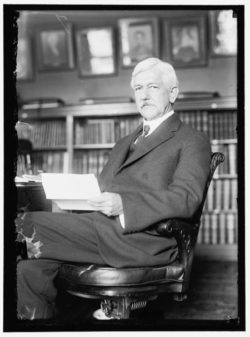
Thus, all of the societal, medical, scientific and governmental resources are in place to protect our country from the worst of the COVID-19 epidemic.  We know how to do it and have successfully done it in the past.  The photo at the beginning of this post is of Dr. William C. Gorgas, the Army doctor and chief medical officer of the Panama Canal construction project tasked by Theodore Roosevelt to battle against the yellow fever and malaria that had defeated the French construction effort.  He used military style tactics to control the mosquitoes carrying the diseases and enabled the United States to complete a project that others only dreamed about. (See https://www.wearethemighty.com/articles/this-army-doctor-made-the-panama-canal-possible-by-killing-mosquitoes   The same unified commitment and community spirit can prevail once again in the fight against COVID-19.  

Foreign Policy, Realist Theory

The War Powers Resolution

Opening the Pandora’s BoxPresidential Military Power, Part 2

The War Powers Resolution of 1973 was enacted  to reclaim Congressional war-making authority under Article I of the Constitution.  Presidents have contested its constitutionality, but typically try to comply with the letter of the law, especially in true national crises. The Soleimani killing highlights the two main flaws in the law – the ability of Presidents to ignore it at their convenience and its failure to encompass modern forms of warfare.   Any authentic foreign policy of realism and restraint must begin with consideration of the reforms necessary to remedy these flaws. 

Together with other statutes, the resolution set up a process of consultation, reporting and approval designed to insure congressional input into the decision to commit the nation to military action. First, a separate statute requires notice and consultation with congressional leaders (colloquially known as the “Gang of Eight”) on classified intelligence matters, which would practically give those leaders notice of any threats that might require a military response. The War Powers Resolution then requires the president to report to Congress within 48 hours any introduction of American military forces into hostilities, the imminent threat thereof or into the territory of another nation while equipped for combat.  The action must be terminated if Congress has not declared war or adopted an authorization for use military force (AUMF) by sixty days after the report was due, which can be extended for 30 days only if necessary to safely withdraw troops from the combat area. Otherwise, there are no exceptions except where an attack makes it impossible to convene Congress. 

The process is relatively simple, but presidents have still found ways to game the system to reduce or avoid any serious oversight.  As the Soleimani action shows, they can avoid consultation entirely in cases of short-term attacks.  Even when an AUFM is granted, it has not historically been limited in duration.  Presidents Bush, Obama & Trump have also shown how the text of an authorization can be stretched to justify interventions far beyond its original intent.  

The AUFM granted after the September 11, 2001 attack is the most notorious example. It authorizes the use of force against all “nations, organizations, or persons … [the president]…. determines planned, authorized, committed, or aided the terrorist attacks that occurred on September 11, 2001, or harbored such organizations or persons, in order to prevent any future acts of international terrorism against the United States by such nations, organizations or persons”.   This created the endless and amorphous “War on Terror”, which has been used to justify both human combat and drone attacks against terrorists only loosely affiliated, if at all, with Al Qaeda.  According to the Congressional Research Service, it was used by the Bush and Obama Administrations to justify not only the war in Afghanistan, but also military  interventions in Djibouti, Eritrea, Ethiopia, Georgia, Iraq, Kenya, Libya, Philippines, Somalia, Syria and Yemen.  President Trump uses the same excuse to continue these operations. This is exactly the kind of unsupervised and endless war that the War Powers Resolution was intended to prevent.  

In the end,  the main weakness in the Resolution is the absence of any effective congressional enforcement mechanism. Congress has the right to adopt a concurrent resolution to stop presidential non- compliance, repeal a previously granted AUFM or simply refuse to appropriate money to fund noncompliance, but never had the will to exercise those rights.  Republican congresses never seriously challenged Clinton and Obama abuses just as Democratic congresses failed to check the excesses of Bush. The courts are no help since individual members of Congress have no private right to sue to force a President to seek an AUFM (See https://en.wikipedia.org/wiki/Campbell_v._Clinton). The resolution can succeed only if Congress unites to defend its war-fighting prerogative. 

 There is a little hope.  In the wake of the Soleimani killing, both the Democratic House and Republican Senate have passed bills to prohibit further military strikes against Iran without congressional approval. The two versions must be reconciled in a conference committee and, even if passed, will certainly be vetoed by President Trump. Will this Congress be able to muster the same courage of the Congress that overrode Nixon’s veto of the original War Powers Resolution?   Unfortunately, this seems highly unlikely in the current atmosphere of hyper-partisanship. 

Thus, incidents like the Soleimani assassination are likely to continue or even worsen until congressional war powers are significantly strengthened.   The next post will propose some specific changes to the law to achieve this goal.